AI CCTV (Intelligent Video Analytics): A practical guide for businesses in Delhi
AI CCTV (Intelligent Video Analytics): A practical guide for businesses in Delhi
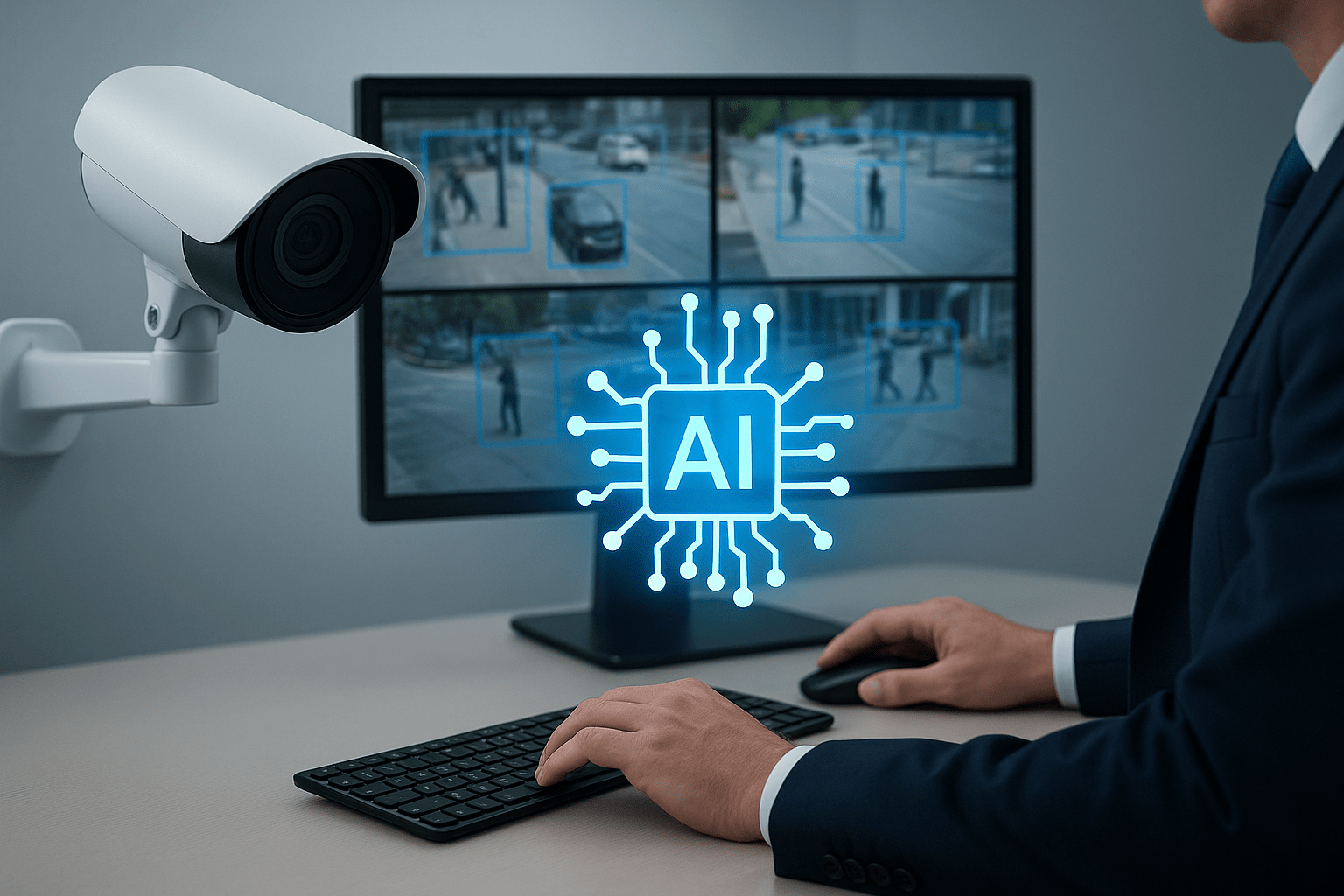
As CCTV installations have proliferated, reviewing video manually has become impractical for most organizations. AI-powered video analytics — often called AI CCTV or intelligent video analytics — can be designed to help organisations surface relevant events, index video for faster search, and enable targeted monitoring. This guide explains what AI CCTV is, common business use cases, deployment considerations, and how to approach a pilot in Delhi.
What is AI CCTV?
AI CCTV refers to systems that apply computer vision and machine learning to live or recorded video to identify objects, behaviours, or anomalies automatically. Typical building blocks include object detection models, event rules or classifiers, edge or cloud processing, and integration with a video management system (VMS) or alerting platform.
Common business use cases
- Perimeter and access monitoring: Flagging intrusion events or movement in restricted zones (can be designed to focus on defined areas).
- Occupancy and people counting: Monitoring footfall for safety, capacity control, or operational planning.
- Asset protection: Detecting unattended objects or suspicious activity around high-value equipment.
- Operational insights: Using searchable video and analytics to investigate incidents or understand patterns.
How intelligent video analytics works (high level)
At a basic level, analytics pipelines include:
- Video ingestion: Cameras stream footage to an analytics node (edge device or cloud service).
- Detection and classification: Models identify objects, actions, or anomalies in frames.
- Event filtering: Rules reduce noise and surface meaningful alerts for operators.
- Indexing and storage: Relevant clips are tagged and stored for search and review.
Deployment considerations
- Camera compatibility: Verify that your existing cameras expose standard streams (RTSP/ONVIF) or whether upgrades are needed.
- Edge vs cloud: Edge processing reduces bandwidth and can lower latency; cloud processing simplifies central management. The right choice depends on site bandwidth, compute needs, and latency requirements.
- Integration with VMS and workflows: Plan how analytics alerts will reach your security or operations teams—via VMS, SMS, email, or ticketing systems.
- False positives and tuning: Models and rules typically need tuning on site-specific footage to reduce irrelevant alerts; a pilot helps establish realistic baselines.
- Bandwidth and storage: Plan for the impact of continuous streams and retained clips; analytics can reduce storage needs by flagging only relevant footage.
Data privacy and compliance
Video footage is personal data in many contexts. When deploying AI CCTV in India, consider privacy-by-design: minimise retention, anonymise where possible, secure feeds in transit and at rest, and document retention policies. Consult legal counsel to align with applicable laws and corporate policies.
How to evaluate a pilot
Start small and measurable:
- Define clear use cases: Choose 1–3 outcomes you want to validate (for example, perimeter alerts or people counting at a specific gate).
- Collect representative footage: Use live or recorded video from target cameras to test models.
- Agree acceptance criteria: Define what success looks like (e.g., acceptable detection performance, alert volumes, or usability of alerts).
- Tune and iterate: Use pilot results to adjust detection thresholds, rule sets, and camera angles.
Working with a local partner in Delhi
A local partner can help scope a pilot, ensure camera compatibility, and run on-site tuning. Any specific solutions or features can be explored as part of a proof-of-concept so you can validate performance on your actual sites and workflows.
Conclusion
AI CCTV and intelligent video analytics can be designed to make video more actionable for businesses, but real-world performance depends on camera quality, site conditions, and careful tuning. The recommended path is a focused pilot that validates the chosen use cases on live footage.
If you’d like to explore a pilot in Delhi or want help scoping an AI CCTV proof-of-concept, contact Renbotics AI to discuss options and next steps.


Comments
Post a Comment